

Product Categories
Choosing the Right Mask: A Buyer's Guide to ASTM Ratings
A practical framework for matching mask type to clinical risk, based on the ASTM F2100-19 and EN 14683:2019 testing standards.
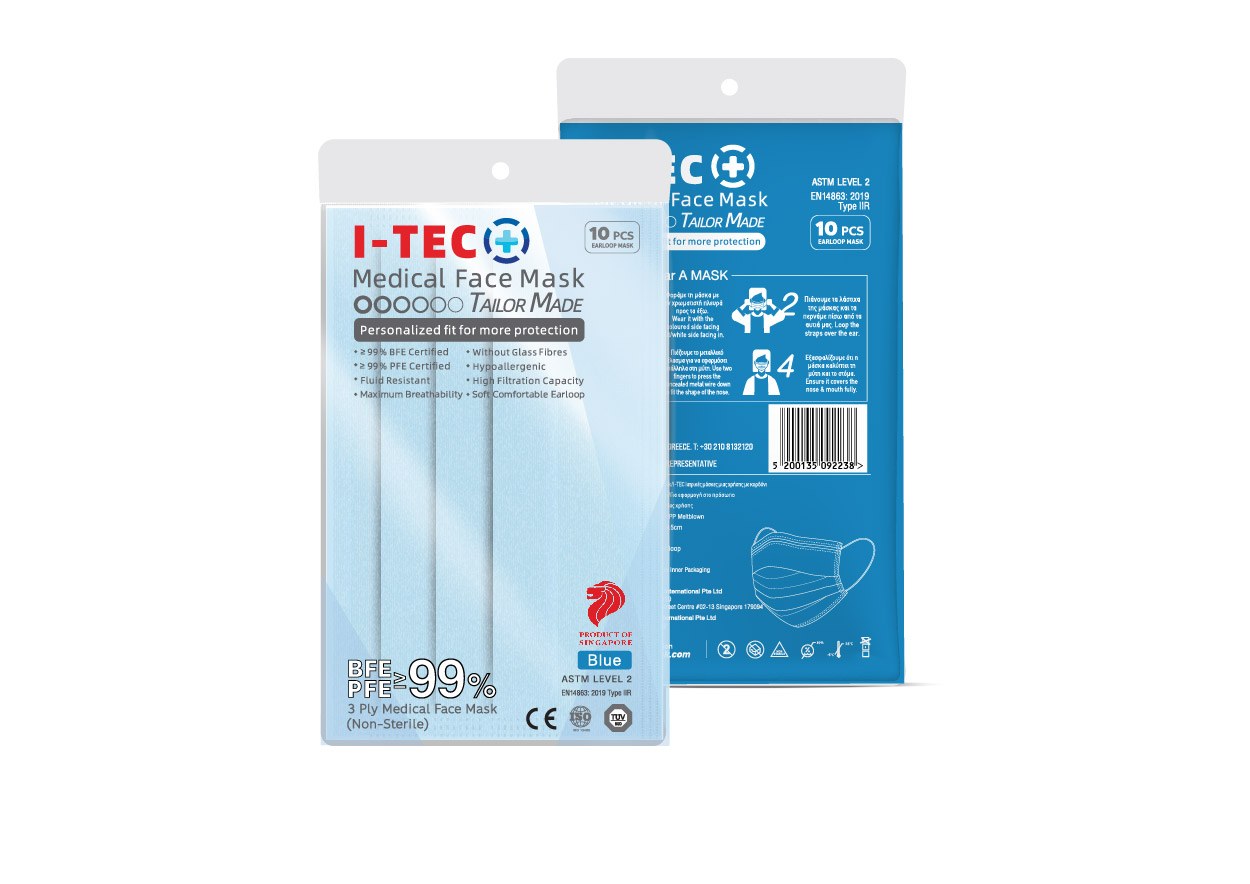
Not every mask is rated for the same level of protection, and the difference isn't always obvious from the packaging alone. Two masks can look nearly identical and still be rated for very different situations. The clearest way to compare them is by their ASTM or EN 14683 rating, the industry standards that define exactly what a mask has been tested to withstand.
What the ratings actually test
Two standards cover most medical face masks in circulation: ASTM F2100-19 (the U.S. standard) and EN 14683:2019 (the European standard). Both grade masks against the same core criteria, just organised differently.
| What's tested | ASTM Level 1 | ASTM Level 2 | ASTM Level 3 |
|---|---|---|---|
| Bacterial Filtration Efficiency (BFE) | ≥95% | ≥98% | ≥98% |
| Sub-micron Particle Filtration (PFE) | ≥95% | ≥98% | ≥98% |
| Resistance to synthetic blood penetration | 80 mmHg | 120 mmHg | 160 mmHg |
| Flammability | Class 1 (≥3.5 seconds), all levels | ||
EN 14683:2019 uses Type I, II and IIR instead of Levels 1–3, with broadly comparable filtration thresholds; Type IIR is the fluid-resistant equivalent of ASTM Level 2–3.
A simple framework for selecting the right mask
Rather than starting from the rating chart, it's usually easier to start from four practical questions:
Filtration
What's in the air?
Around smoke, aerosols or a patient with a suspected airborne infection, a high-filtration mask (KN95 FFP2 or NIOSH N95) is the appropriate choice, not a standard procedure mask.
Fluid Resistance
Risk of splatter?
Where blood or bodily fluid splatter is a realistic risk, an ASTM Level 3 fluid-resistant mask is the safer standard, particularly in an operating room setting.
Features
Fit for long wear?
Soft, flat earloops reduce discomfort over long shifts. It's a comfort factor, not a safety rating, but it affects whether staff wear a mask correctly for the full duration.
Fit
Full seal?
Even a correctly rated mask underperforms if it doesn't seal against the face. Nose and mouth need to be fully, snugly covered, with a properly shaped nose clip.
Matching mask type to setting
-
Procedure masks (ASTM Level 2)
Suited to clean environments, sterile core areas, processing departments and general ward or bedside procedures where fluid exposure risk is limited.
-
Surgical masks (ASTM Level 3)
Intended for sterile environments with meaningful fluid exposure risk, such as operating rooms, where closeness of fit and fluid resistance both matter.
-
KN95 FFP2 or NIOSH N95
The appropriate choice around smoke, or with patients who have a known or suspected airborne transmissible condition, where filtration against fine particles is the priority.
A note on Level 2 vs. Level 3
In practice, the difference between an ASTM Level 2 and Level 3 mask often comes down to millimetres of pressure resistance. When fluid exposure risk is genuinely uncertain or high, it's usually simpler to default to Level 2 for breathability and Level 3 specifically where fluid resistance is the priority, rather than treating the choice as marginal.
Get In Touch
Not sure which mask rating fits your requirement?
Tell us the setting and risk level, and our team will help you match it to the right product.